
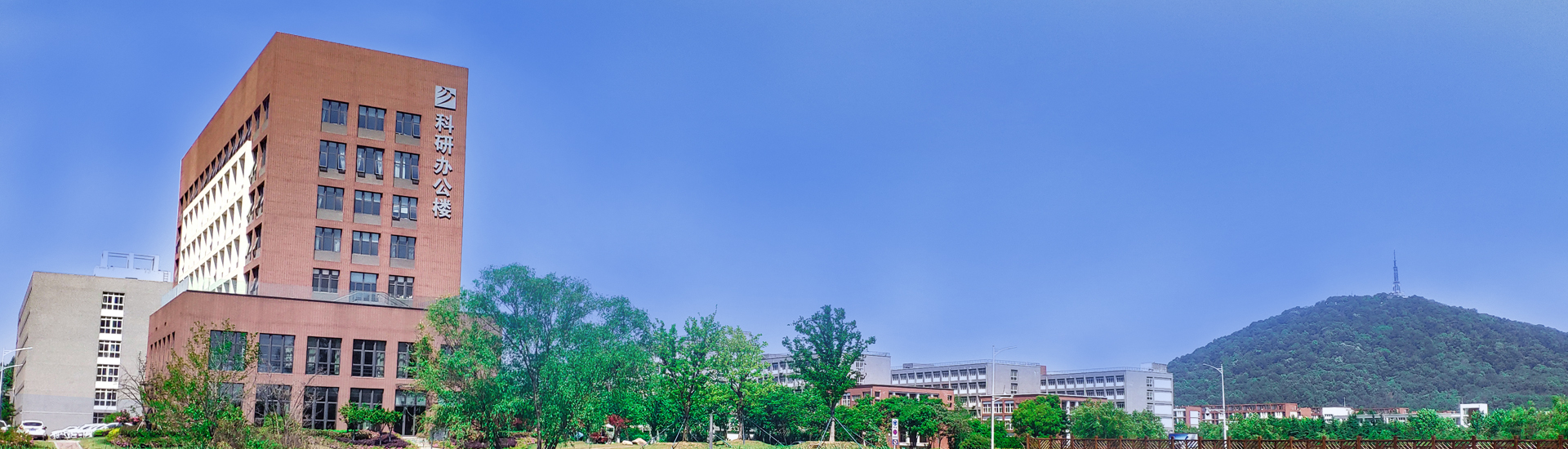
Recently, AXHU School of Art faculty ZHANG Xue’s two works of oil painting joined the Chinese ‘big names’ exhibitions, which is, to some extent, showcasing the school-wide highly specialized efforts on the groundbreaking art practice.
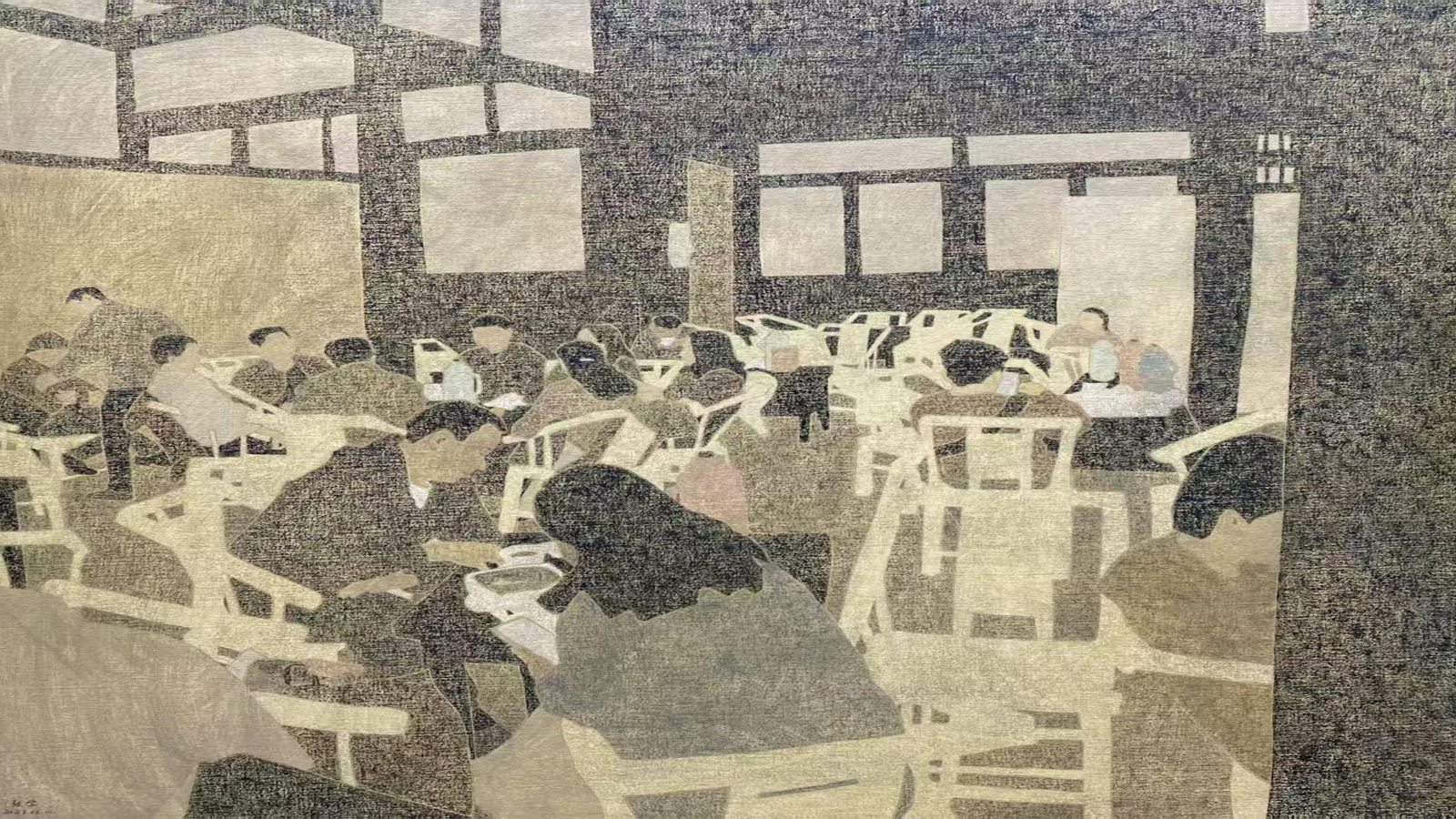
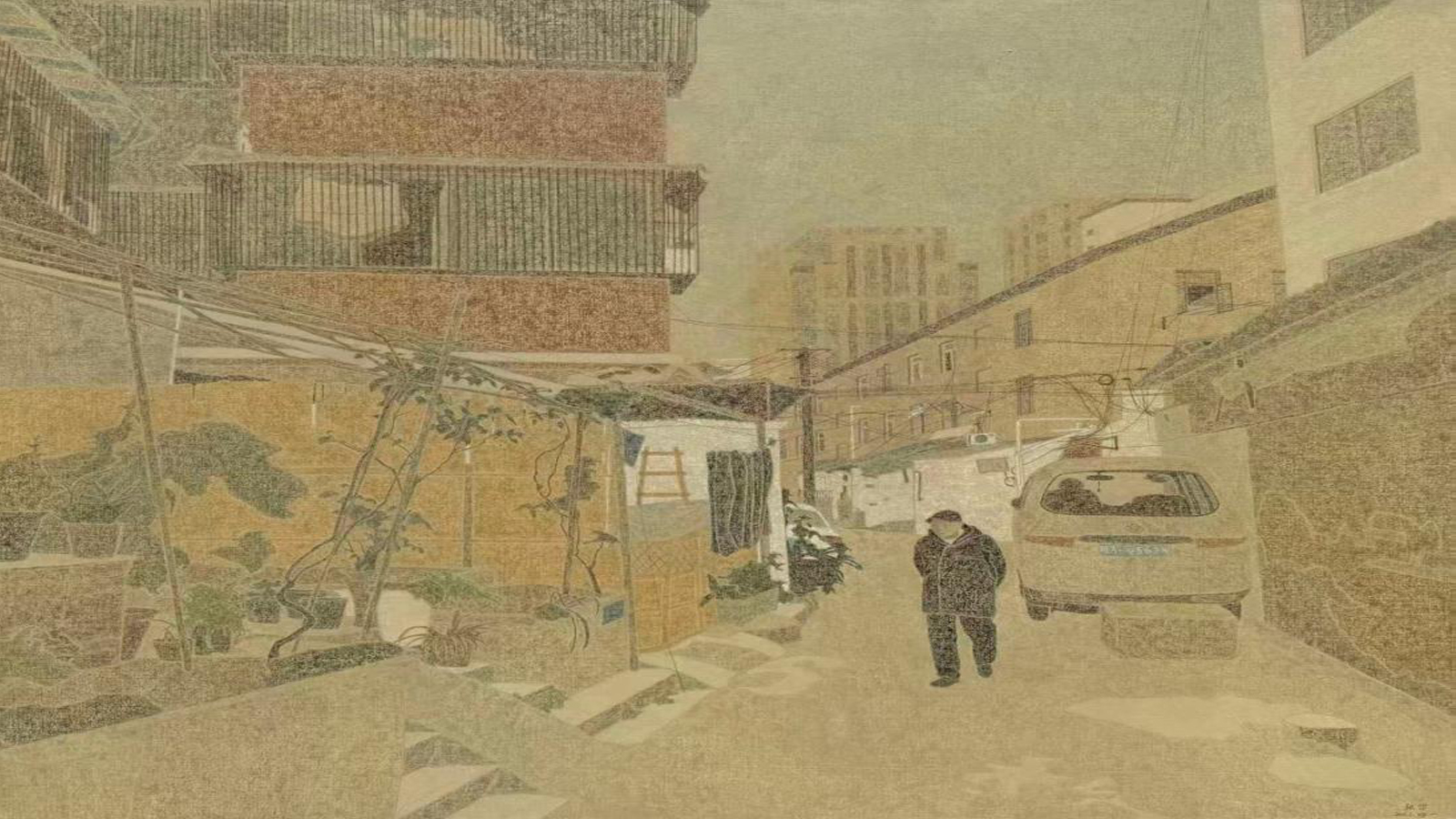
At the 8th National Youth Fine Arts Works Exhibition, co-organized by the China Artists Association, Publicity Department of Chongqing Municipal Committee, CHONG QING FEDERATION OF LITERARY AND ART CIRCLES, China Literature & Art Center, CHONG QING ARTISTS ASSOCIATION, and the Sichuan Fine Arts Institute, Zhang’s original painting titled “A Story of Little Town—No.5 in series” was then competing as one of the 120 finalists of oil painting, (which, after the preliminary screenings, are just from 482 qualifiers of 1,089 candidate works by the current Chinese fine arts influencers).
Established in 1957, it was professionally recognized as the most impactful event at the Chinese fine arts official ratings, this year’s comprehensive exhibition concluded the storied achievements over the past three years, which is also regarded as the ‘show and exchange’ platform special for the young talents projected by China Artists Association.
Also, after rounds of strict review and examination at the “Honoring the Spirit: Homage to the Classics—A National Exhibition of Xieyi Art” organized by the National Art Museum of China, then, a limited-edition collection of 191 works came out of 2,800 nominations nationwide, meanwhile, with his another contribution of “A Story of Little Town-Tea House—No.4 in series,” he was also among the 63 oil painting finalists thereof, creating the biggest buzz across Chinese art history.
The two prize-winning works of Xieyi Art写意—honoring the Chinese heritage, while introducing some of the faceted elements in modernism to a broader audience—spotlighted a newfound visibility of ancient townscape via the ‘structuralist representation’ adaptable in both a hue of interior serenity and tranquility-and the intriguing nuances of classics revival in fashionable expressions—harmoniously, being modified with his oil painting ‘language’ which is masterly used in weaving humane matters into the contemporary urbanized life, altered with a meaningful color palette and pattern in popularity, reconciled at odds for the in-house design of a checkered fabric intersecting constitutionally by such centuries-old weathered gray walls around which fresh-green potted plants were sparkly dotted with a postmodernist art-deco outlook, and other romanticized distinctions—, to improvisationally evoke a cascade of nostalgic fantasies, rustic appetites, Cottagecore lifestyle, and much more.
—Rolling out in a row, and reproducing the academic research of one-of-a-kind art form in the School’s line connected to the national- and provincial-level artistic engagements of still impact over time, many of the faculty members’ bold, creative practices over the past years, like Zhang Xue, revisiting the deep Chinese traditional esthetic of fine arts in particular, have already been embodying their artistic innovation rhythmically and vigorously, which had reaped lots of international cognition too.
With that, effectively, the School of Art will continue translating its internal teaching reform and transformation based on the national exhibition (or competition) series into the permanent authenticity of AXHU Education.


Copyright © Anhui xinhua univerisity All rights reserved